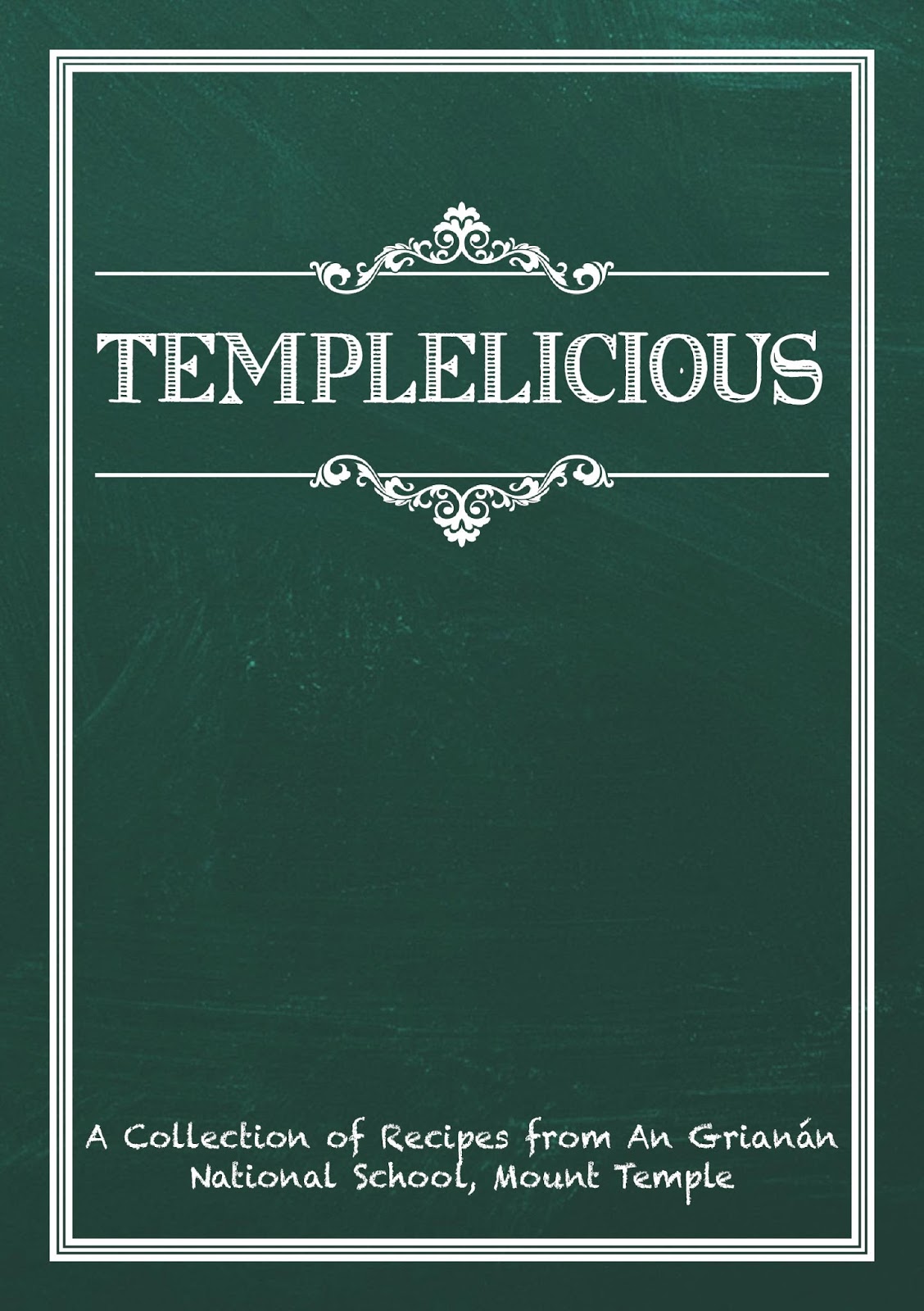
For the past few months I have been working on a very exciting project. It's a cookbook with my local national school, An Grianán N.S., Mount Temple. I'm delighted to say it is now back from the printers and it's looking splendid. 'Templelicious' is a collection of recipes, from the 4th, 5th and 6th class students and the staff of An Grianán, but there are also recipes from some well known celebrities, such as Neven Maguire, Robbie Henshaw, John Heslin and James O' Donoghue, as well as plenty of inspirational quotes from some of the children's sporting heroes. Additionally, the book includes words of wisdom, including kitchen tips, remedies and old wives' tales, from the local active age group. All in all, this is so much more than a recipe book, it’s a glance into moments the school children hold close to their hearts, while also being reflective of the community of Mount Temple as a whole.


This project has been incredibly rewarding for the entire school. From choosing the title of the book to styling and photographing the food photos, the children have been involved every step of the way. The older end of the school submitted their recipes, while the younger end had the opportunity to recipe test these recipes before the book went to print. The book was compiled and edited by the school's cookbook committee, comprising of my good self and staff members, Ambrose McGowan, Anna Cahalin, Áine Curran, Catherine Claffey, and Carmel Keogh. My eldest son, Jack, took on the role of designer and typesetter, and, I must say, he did a marvellous job.


My son, Tiarnán, is in 4th class, so his chosen recipe for the book was Sweet Scones. Like so many of the other children, he chose this recipe because it's one of his absolute favourites. This is part of the wonder of a book like this; for these children, in years to come it will be a little snapshot of their childhoods.


The book will be launched by Neven Maguire, in the school, this Wednesday, the 9th of March, at 2pm. On the day, members of the Westmeath Senior football team will also be making an appearance. Tea and samples from the book will be served, and all are welcome to attend. The book will retail at €15.


If you would like to buy a copy of the book please contact the school on 090-6481085.

In the not so distant past consuming too much fat was considered the main catalyst to the decline of one's health. However, in recent years medics and researchers alike have taken a bit of a u turn and have deflected the focus off fat and are now declaring war on sugar, blaming it for a host of health problems and highlighting it's part in the current obesity crisis. In general, the over-consumption of anything will never do us any favours, but a poor diet and the over indulgence of sugar has long been the number one risk factor for developing diabetes. The most common form of diabetes is Type 2, and this develops when the body does not produce sufficient insulin to function properly. Insulin is a hormone which helps with the breakdown of sugars and carries them from the bloodstream into the cells. If continuous over consumption of sugar occurs, we put our insulin supply under severe pressure and leave ourselves at risk of developing diabetes. 

As well as regular exercise, establishing and maintaining a healthy diet can be the most beneficial way to avoid or control Type 2 diabetes. Cutting down on sugar can drastically improve our health, while also aid in encouraging a healthy weight. Even without having a major risk of developing diabetes, we all need to be aware of hidden sugars in our foods.We know that biscuits or cakes are laden down with sugars, so we can consciously choose how much of these we eat. However, it's the hidden sugar in our food which is the real problem. Many of our everyday foods, such as yogurts, breakfast cereals and sauces, are overloaded with sugar. While food products that are marketed as the 'healthy' or 'low fat' option quite often are high in sugar or salt, or both. The World Health Organisation recommends that as adults we should consume no more than 50g or 12 teaspoons of sugar a day, which for some experts is still too much. Wholesome foods are the best choice when trying to avoid excess sugars in the diet. The glycemic index (GI) was first developed to help people with diabetes choose foods that maintain a steady blood sugar level. Foods with a low glycemic index, should be prominent in all of our diets, as they release their energy slowly and help us to avoid sugar highs. Beans, lentils, sweet potatoes, oats, leafy greens, unsalted nuts and seeds, are all among these wholesome, low GI foods. Whenever possible, we should incorporate these foods into our diet. They help to maintain a consistent blood sugar and encourage fullness, which in turn can aid in steering us away from those sugar-laden foods.

Cheesy Beany Stuffed Potatoes

Beans are a great addition to the diet as they are high in fibre, high in protein and are rich in vitamins and minerals. They also happen to be the perfect choice for a low sugar diet, as they rate impressively low on the glycemic index. These stuffed potatoes are packed with flavour and are best served with a simple green salad.

Ingredients
4 small-medium sized sweet potatoes
1 tbsp olive oil
1 onion, finely diced
3 cloves garlic, crushed
1 yellow pepper, finely diced
1x400g tin of chopped tomatoes
1 tbsp balsamic vinegar
100g butter beans, from a tin, drained and rinsed
100g kidney beans, from a tin, drained and rinsed
sea salt & freshly ground pepper
Handful of basil leaves, plus a few extra to serve
50g cheddar cheese

Method
  1. Preheat the oven to 200°C/fan 180°C /Gas Mark 5.
  2. Pierce each sweet potato several times with a fork. Place on baking tray lined with parchment paper. Bake in the oven for about 45 minutes, or until tender.
  3. Place a large saucepan over a medium heat. Add the olive oil, once hot add the onions. Gently sauté, stirring regularly for 5 minutes. Add the yellow pepper and garlic. Stir to combine and cook for a further 2 minutes.
  4. Add the tomatoes, balsamic, butter beans and kidney beans. Season with a little salt and freshly ground pepper. Tear in the basil. Stir to combine. Turn down the heat to low and simmer for 25 minutes.
  5. Take the cooked potatoes from the oven. Carefully, diagonally split in half, and scoop out most of the flesh into a bowl. Mash with a fork and add to the cooked bean mixture. Stir to combine.
  6. Fill the centre of the scooped out potatoes with the cooked bean and sweet potato mixture. Top with a sprinkling of cheddar cheese. Return to the oven for 5-7 minutes, for the cheese to melt. Serve with a few fresh basil leaves on top.

    Excerpt from my Home Nurse column, printed in Irish Country Living, 8th October 2015. 

It's that time of year when our thoughts, well mine anyway, turn to what we're going to whip up in the kitchen over the festive season. Last year I put together some of my favourite festive recipes, and my wonderfully clever son, Jack, brought them together to create a mini Christmas eBook. The recipes included are fresh updates on some of the traditional holiday favourites, and I really hope that these recipes will be enjoyed at your family table, as much as they're enjoyed at mine. 


Nessa's Christmas Kitchen, is fully illustrated with colour photos and it includes 14 easy-to-follow recipes.

Recipes Include:
Potato Cakes with Smoked Irish Salmon
Poached & Butter-Basted Turkey Breast
Sage, Date & Pistachio Stuffing
Creamy Potato & Leek Gratin
Mulled Berry Trifle
Lemon Meringue Pudding


The winner of the The K Club Cookbook is Colette {comment number one}. Thank you so much to everyone who entered the give-away.

I received a copy of The K Club Cookbook: Producer to Plate, a few weeks back. Before I even opened this impressively sized book, the title itself drew me in. I'm always ever eager to find out more about the food we're eating, and rather importantly more about the people who passionately produce it, so this book immediately appealed to me. The author of the book is Finbarr Higgins, and there would be none better to give us an insight into the kitchens of The K Club than Finbarr, as he has been the head chef there since 1996. As this is a  collection of recipes from a working kitchen not all would be entirely suitable for the home cook, however there are many recipes included which are rather straight forward, and with Finbarr's detailed instructions, they would certainly be manageable in a home setting. As well as the recipes for the dishes served in The K Club there is a substantial section dedicated to the hotel's magnificent wine cellar. This is presented by award-winning Chief Sommelier Lisa O'Doherty. This book would very comfortably sit on a coffee table. The imagery is quite beautiful, while the information on each of the producers and the insight into their wine cellar, makes for an easy, but equally an educational, read. 


I have a copy of this monumental book to give away to one lucky reader. To be in with a chance of winning, answer this question in the comment box below; In which county is The K Club situated?

All names with the correct answers will be put in the hat and the winner will be picked at random, next Friday 20th November. I will announce the lucky winner in a blog post next week.


TERMS AND CONDITIONS: The competition is open to residents of Ireland only. You must be over 18. No cash alternative is possible. The winner must email/contact me within 7 days of them being announced as the winner, or another name will have to be drawn from the hat. 

Best of luck! 

Potatoes were always a steady staple in my house. Coming from a farming background they were an essential part of our daily meals. If there weren't a few spuds on the plate my father would be rather certain he had gone the day without any dinner. Growing up in Ireland in the eighties you'd have to be fierce posh to be eating the likes of pasta or rice, so the original 'superfood', the potato, was never in fear of being knocked off its number one spot. Even though every sort of a carbohydrate is now available to plate up for dinner, my heart has always remained with the humble spud. They're incredibly versatile, making them a marvellous base for something scrumptious. When trying to please a household of different likes and dislikes versatility and a little creativity is key to clean after-dinner plates. One of my son's have followed in his Granddad's footstep and no matter what the dinner, be it a creamy chicken dish, a bolognese, or even a korma, he's happiest when spuds are somewhere in the mix. While for me, there's not much a bowl of steaming, creamy mashed potatoes can't comfort. 

Roosters tend to create the very best mashed potatoes, so when we're choosing which varieties to plant in our garden each March, they're always top of our list. One of my long-standing measures to encourage my children to become excited about their food is to include them in the planting and care of the produce in the garden. This worked especially well when certain fussy stages were progressing. It turns out that children are much more likely to eat their dinner, if they've put a little of their own manpower into producing the meal in some way. Even as an adult, it's ever so exciting to have a successful yield of any vegetable or fruit form the garden. Something that we're always guaranteed to produce almost perfectly is our crop of potatoes. Potatoes are incredibly easy to grow in our rich, Irish soil, and since they can start to be harvested after a short 10 weeks, their progress can yield great excitement and anticipation for any little gardener.


A fun, plant your own spuds project:
If you are limited for space, potatoes can even be planted in a large shopping bag. It's a very simple method and all that is needed is a bag of compost and a few potatoes that have gone to seed. A not so thick layer of compost is placed at the bottom of the bag, before adding two or three seeded potatoes and topping with another thin layer of compost. Keep the extra compost to one side. Now, this is the exciting part for the children, because with a daily sprinkling of water, the potatoes will sprout up little leaves, another thin layer of compost has to be added to the bag, or indeed large container. This process is repeated until the compost has filled the entire bag and once this happens it won't be long before the potatoes are being harvested. Bord Bia have some very useful guidelines on their site for planting a school garden, and of course potatoes feature, but this would also make for a marvellous home project with little ones. It's now a little late in the year for planting spuds, but if using this bag method indoors in a sunny spot, possibly in a greenhouse or conservatory, you can plant them as early as February.


Even if you don't get the chance to grow your own, we are fortunate to have many great growers in Ireland, who are passionate about producing something special for our dinner table, so let's support their good work. Potatoes have always been immersed as part of our history in Ireland and this long standing merit should be celebrated. If you have slipped out of the routine of including potatoes as part of your diet, and are wondering how to make the most of the spud, head over to Potatoes: More than a bit on the side where there are many delicious and interesting potato-based recipes. Along with Bord Bia and AHDB they have launched a big campaign to increase the profile of the potato, and I'm delighted to be working with them in highlighting this.

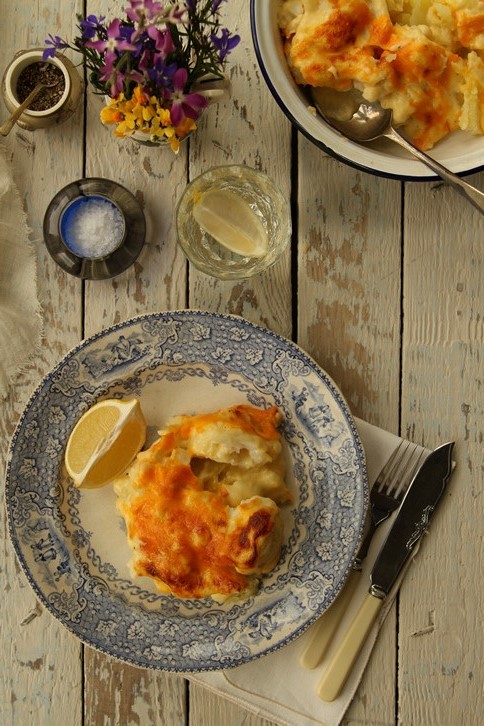
Potato, Cod & Cauliflower Gratin

This dish can be prepared in minutes, making it a great choice for when time is a little sparse. The creamy coating of sauce over the potatoes, cod and cauliflower lends a little luxury to this nutritious mid-week dinner. It's one dish that young and old will enjoy.


Serves 4
Ingredients
800g Potatoes
½ head of cauliflower, divided into florets
50g butter
50g plain flour
600ml milk
Sea salt and freshly ground pepper
150g cheddar cheese, grated
500g cod, boned and cut into bite-size pieces (ask your fishmonger to do this)


To Serve
1 lemon, cut into wedges


Method
1. Pre-heat the oven to 200°C/fan 180°C/Gas 6. Peel and thinly slice the potatoes. Add them to a large saucepan, with the cauliflower florets. Cover with boiling water. Bring back to the boil and simmer for 5 minutes. Drain in a colander.


2. To make the  sauce, melt the butter, over a low heat, in a medium sized saucepan. Once melted, using a wooden spoon, add the flour and stir for 2 minutes to allow the flour to cook a little, but be careful that it doesn’t burn.
3. Turn up the heat and very slowly whisk in the milk, using a hand whisk. Stirring constantly, bring to the boil then immediately turn down the heat and simmer for a minute. Season with a little sea salt and freshly ground pepper. Take from the heat and stir in half of the cheese.


4. Add the par-cooked potatoes and cauliflower to a large casserole dish. Top with the bite-size pieces of cod.
5. Pour over the cheese sauce, making sure to cover the potatoes, fish and cauliflower. Sprinkle over the remaining cheese.
6. Place in the pre-heated oven for 20- 25 minutes, until the cheese is golden and bubbling and the fish is cooked through.
7. Serve straight away with a little slice of lemon, for squeezing over the dish.
Last month I had the pleasure of going on a day trip with the Irish Food Writer's Guild. Kilkenny was our destination, and we were met with open arms by so many of the county's most enthusiastic and passionate food producers. Our day started in the beautiful Highbank Organic Farm. Julie and Rod treated us to a tour of their farm and their new distillery, where they produce the most delicious organic apple gin, schnapps and orchard spirit. While in Highbank we had the opportunity to meet, and have a chat, with some more Kilkenny food producers. We then popped by Thomastown's remarkable School of Food. They have an incredibly impressive facility and recently have launched their professional Level 5 certificate course. Our next stop was Goatsbridge Trout Farm, where Mag and Ger gave us the history of the farm and we even had the chance to catch a glimpse of their splendid school of trout. Our outing finished with a truly scrumptious meal at the magnificent Mount Juliet. Each bite of our meal was delectable. Kilkenny certainly is a stunning part of our country, with so much good food to offer. As a group we agreed we really had a marvellous time. I'm currently the social media officer for the Guild, but in general for any event my camera is always to hand. Here are just a few of the photos I captured on our memorable trip to Kilkenny.